The LhARA radiobiology programme; status and plans
Abstract submitted to Applying Laser-driven Particle Acceleration (ALPA) at SPIE Optics and Optoelectronics 2027
Josie McGarrigle: for the collaboration
Technical
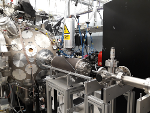
The Laser-hybrid Accelerator for Radiobiological Applications (LhARA) is a facility proposed to deliver laser-driven proton and ion beams for radiobiological research, thereby proving the feasibility of technologies that could provide transformative capability for radiotherapy. The LhARA collaboration’s scientific programme requires systematic comparison of biological responses across laser-driven ions, cyclotron ions, and X-rays. As a proof-of-principle step toward this goal, the PoPLaR (Proof-of-Principle LhARA Radiobiology) initiative has implemented a laser-driven proton beamline at the SCAPA facility, University of Strathclyde.
The PoPLaR beamline, designed, simulated, and optimised using linear optics, transports protons produced via Target Normal Sheath Acceleration (TNSA) through a permanent magnet quadrupole doublet operating at 150 T/m. A copper scatterer selected through Bayesian optimisation delivers a uniform dose field across a bespoke 2.7 cm² cell dish. In Phase 1, beam characterisation was performed using radiochromic film, with proton energies up to 11-12 MeV measured at the target. In Phase 2, the first in-vitro irradiations of biological samples using laser-driven protons were carried out in November 2025. A mean dose of 0.57 Gy per shot was delivered, with a beam uniformity coefficient of variation of 13.9%, reducible to 8.4% through scatterer repositioning. Cells were irradiated at three dose levels targeting 1, 2, and 4 Gy.
These irradiations represent an important milestone, demonstrating the feasibility of delivering controlled doses to biological samples using a laser-driven proton source. Key technical challenges identified include shot-to-shot dose variation of approximately 70% and the absence of an on-shot diagnostic, which motivate the next phase of beamline development. We will present the current beamline design and our plans for improvement.