| Version 3 (modified by , 25 hours ago) ( diff ) |
|---|
The LhARA radiobiology programme; status and plans
Abstract submitted to Applying Laser-driven Particle Acceleration (ALPA) at SPIE Optics and Optoelectronics 2027
Josie McGarrigle: for the collaboration
Technical
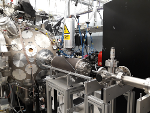
The Laser-hybrid Accelerator for Radiobiological Applications (LhARA) is a proposed facility designed to deliver laser-driven proton and ion beams for radiobiological research and, ultimately, radiotherapy. LhARA’s scientific programme requires systematic comparison of biological responses across laser-driven ions, cyclotron ions, and X-rays. As a proof-of-principle step toward this goal, the PoPLaR (Proof-of-Principle LhARA Radiobiology) initiative has implemented a laser-driven proton beamline at the SCAPA facility, University of Strathclyde.
The PoPLaR beamline, designed, simulated, and optimised using linear optics, transports protons produced via Target Normal Sheath Acceleration (TNSA) through a permanent magnet quadrupole doublet operating at 150 T/m. A copper scatterer selected through Bayesian optimisation delivers a uniform dose field across a bespoke 2.7 cm² cell dish. In Phase 1, beam characterisation was performed using radiochromic film, with proton energies up to 11-12 MeV measured at the target. In Phase 2, the first in-vitro irradiations of biological samples using laser-driven protons were carried out in November 2025. A mean dose of 0.57 Gy per shot was delivered, with a beam uniformity coefficient of variation of 13.9%, reducible to 8.4% through scatterer repositioning. Cells were irradiated at three dose levels targeting 1, 2, and 4 Gy.
These irradiations represent an important milestone, demonstrating the feasibility of delivering controlled doses to biological samples using a laser-driven proton source. Key technical challenges identified include shot-to-shot dose variation of approximately 70% and the absence of an on-shot diagnostic, which motivate the next phase of beamline development. We will present the current beamline design and our plans for improvement.